ARTEAGA TELLO


STADIUMS NOWADAYS SELDOM OFFER SOMETHING NEW. AND THAT’S A PROBLEM
In an increasingly competitive world, architecture has lost its way. It focuses on creating the most fancy and complex wrappingfor the usual framework and design, after all, the idea of the architects is to sell as soon and as quickly as possible and move on to the next development. The architecture has lost its essence: the search for new and better ways to solve spaces.
The stadiums
The stadiums are facilities used for only afew hours a day, few times a month and relatively few seasons a year. That is, their use is incredibly short when compared to the tremendous impact its presence will have on the environment. A stadium is a huge, imposing, monumental construction, designed for everyone to take notice, but ironically, almost always empty: a dead, cold and gloomy building, desertedoff season,and with little people around it. It becomes a huge wall,always blocking the view,imposing itself on nature, spaces, roads, and offering nothing to those living close to it.
The idea behind the new National Stadium of Tokyo is to create a space that is even friendlier in its function and with the environment. A space where you can see the improvement not only in terms of functionality, but alsoin presence, and especially in terms ofimpact at floor level: the most important place for the user on arrival and apparently the most ignored by designers.
Considering all factorsmentioned above, our selected starting point is an icon of Japanese culture: the "MINKA" house: one of the most recognizable symbols of Japan, not only for what it represents for the universal culture, but also for the spiritual and functional perfection of its solution: Simplicity of form, an open invitation to light, and large outdoor spaces to relax the body and soul.


This way, the new stadium is released from the "lost zone", the blockade, the gloom and dirt, elevating the bleachers areafrom the floor level, allowing the passage of light and ventilation, and more importantly: the passage of the visual line of sight. Thus, from the point of view of the community, the user and pedestrians, there is no visual obstacle anymore:instead of a mass of concrete, now there is a view of the horizon to enjoy.
Japanese style, everything is supported by columns, allowing the entry of much more indirect light, so it becomes cleaner, brighter, friendlier, and above all: STUNNING. The building is now an open space, where depending on the needs, can be access-controlled or freely open for the enjoyment of society: a sort of modern Roman coliseum that can be visited by the community. The stadium is transformed and thus becomes a new entity. A multi-purpose evolution that can transform it from a simple place of entertainment, to a recreational space, a community forum, a place to visit, a reference to society, and so on.
EL PROBLEMA DE LOS ESTADIOS ES QUE EN LA ACTUALIDAD YA NO OFRECEN NADA NUEVO.
En un mundo cada vez más competitivo, la arquitectura ha perdido el rumbo. Se a enfocado en crear envolventes cada vez más “hermosas” y complejas, sobre la misma base y diseño de siempre; la idea de los arquitectos es vender lo más pronto y rápido posible y pasar al siguiente desarrollo. La arquitectura a perdido la base de su esencia: el buscar nuevas y mejores formas de solucionar los espacios.
LOS ESTADIOS
Los estadios son recintos que solo se usan por unas horas, unas veces al mes y relativamente muy pocas temporadas al año. Es decir, su uso es increíblemente escaso si lo comparamos con el tremendo impacto que su presencia va a tener en el entorno. Un estadio es una construcción monumental, enorme, imponente, diseñada para que todo el mundo la note y que irónicamente casi siempre estarávacía. Una edificación muerta, fría y tenebrosa, donde fuera de temporada hay poca o nada de gente a sus alrededores. Un enorme muro que siempre estará estorbando la vista, impactando la naturaleza, los espacios, las vialidades, y que no ofrece nada a los residentes que tiene que convivir con el sitio en todo momento.

La idea del nuevo Estadio Nacional de Tokio es crear un espacio que se aún más amigable tanto con su función como con el entorno. Crear un espacio donde se pueda mejorar no solo la funcionalidad sino también su aspecto, y sobre todo, el impacto que se tiene a nivel de piso. El lugar más importante para el usuario al llegar a este tipo de lugares y al parecer el más ignorado por los diseñadores.
Tomando en cuenta lo anterior, se toma como punto de partida un ícono de la cultura japonesa: la casa “MINKA”. uno de los símbolos mas reconocibles de Japón, no solo por lo que representa para la cultura universal, si no por la perfección espiritual y funcional de su solución: Sencillez de la forma, invitación abierta a la luz y amplios espacios exteriores para relajar el cuerpo y el alma.


De esta manera, el nuevo estadio se libera de la zona “perdida”, el bloqueo, la penumbra y la suciedad, elevando las gradas del nivel del piso. Permitiendo no sólo el paso de luz y ventilación, sino aún mas importante: el paso de la visual misma. De ésta manera, desde el punto de vista de la comunidad, del usuario y del peatón, ya no hay obstáculo visual, y ahora, en vez de una mole de concreto que te tapa la vista, hay una vista al horizonte qué disfrutar.
Al estilo japonés, todo se sostiene con columnas, permitiendo la entrada de mayor cantidad de luz indirecta, de esta manera se vuelve más limpio, iluminado, agradable, y sobre todo: IMPONENTE. El edificio ahora es un espacio abierto, donde dependiendo las necesidades, puede tener accesos controlados o abiertos para el disfrute de la sociedad. Una especie de coliseo romano moderno que puede ser visitado por la comunidad. El estadio se transforma y se convierte así en un nuevo ente. Una evolución multiusos que lo puede transformar de un lugar de espectáculos a un espacio recreativo, un foro para la comunidad, un lugar para visitar, un referente para la sociedad, etc.
Structural concept
The structural basis of the new Tokyo Stadiumlays on the followingcore idea: Why spend on raising a frame for each individual element of the project, each one independent from others and superimposed among themselves?Suchstructures, super-structures, and sub-structures are redundant if you can achieve a single self-sustaining one, by linkingan item with others through the balance of its parts.
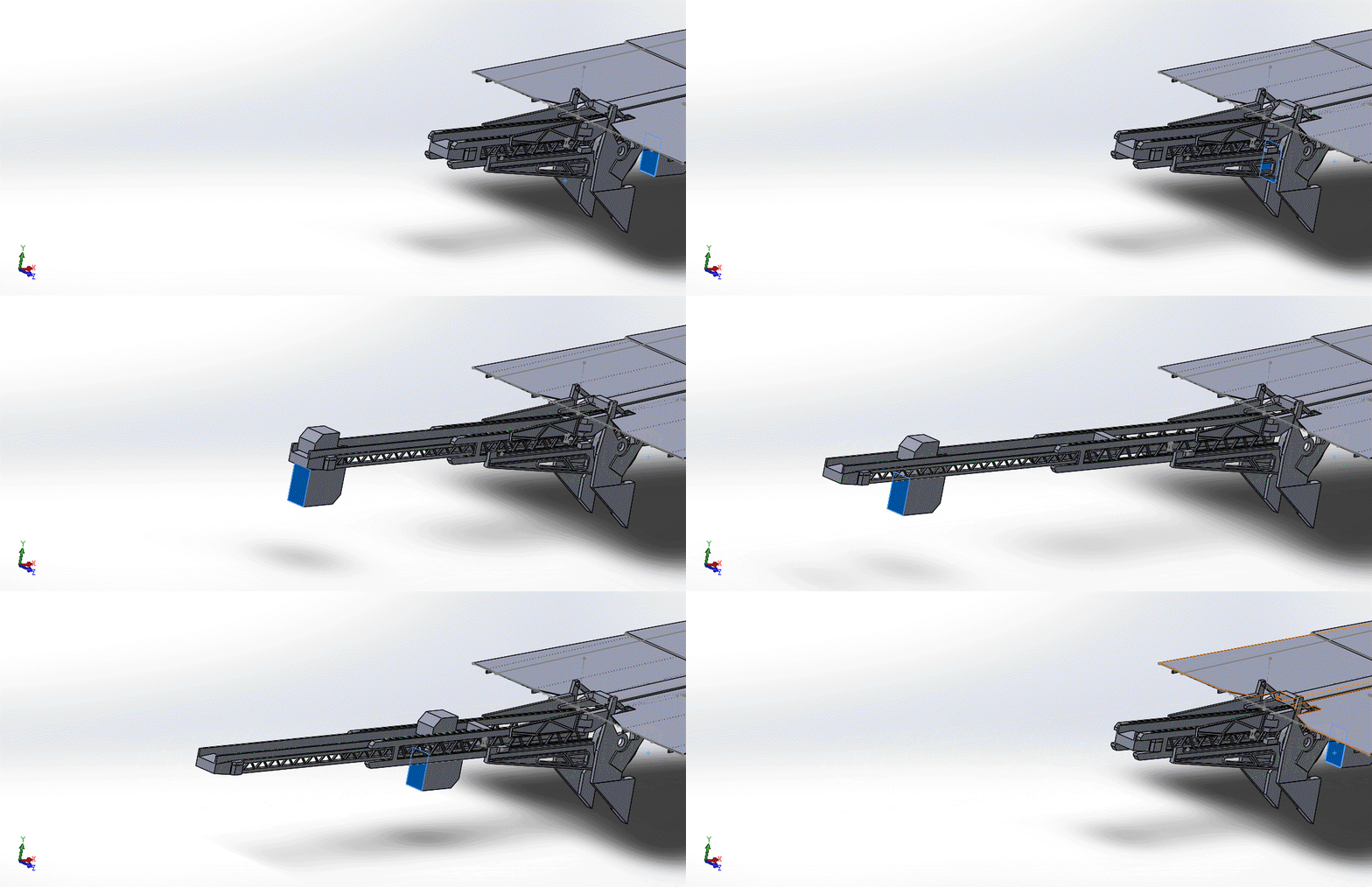
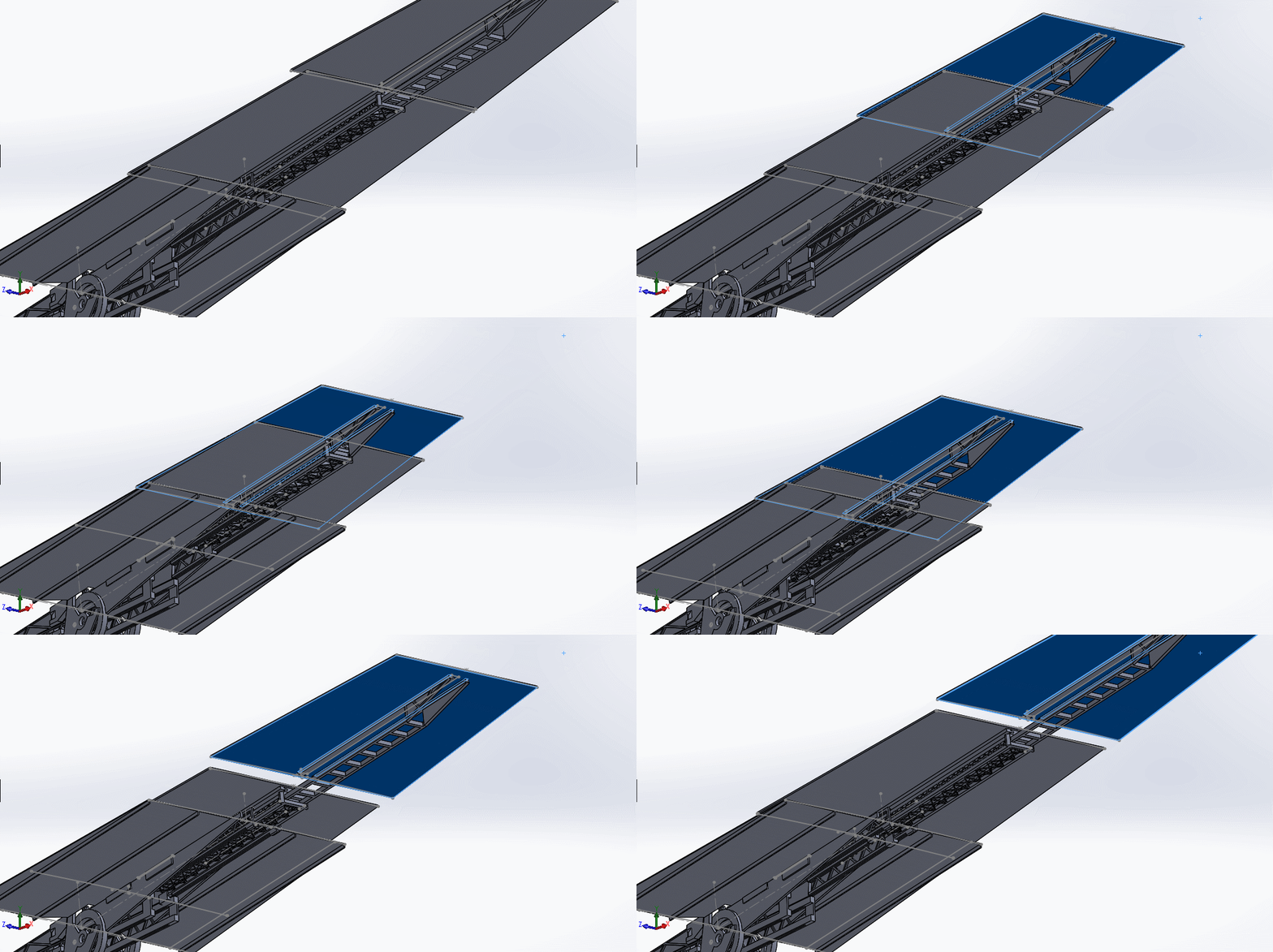
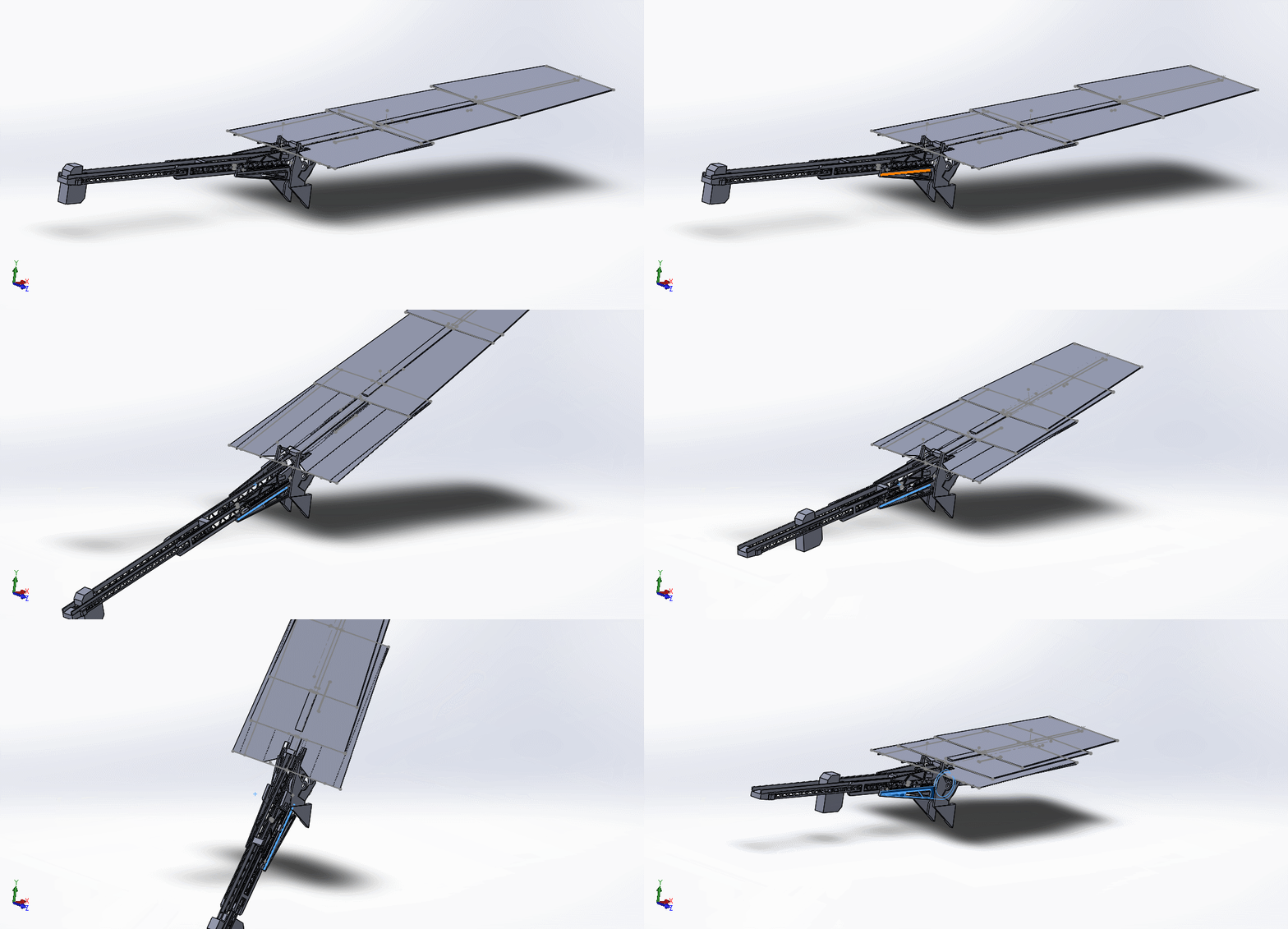
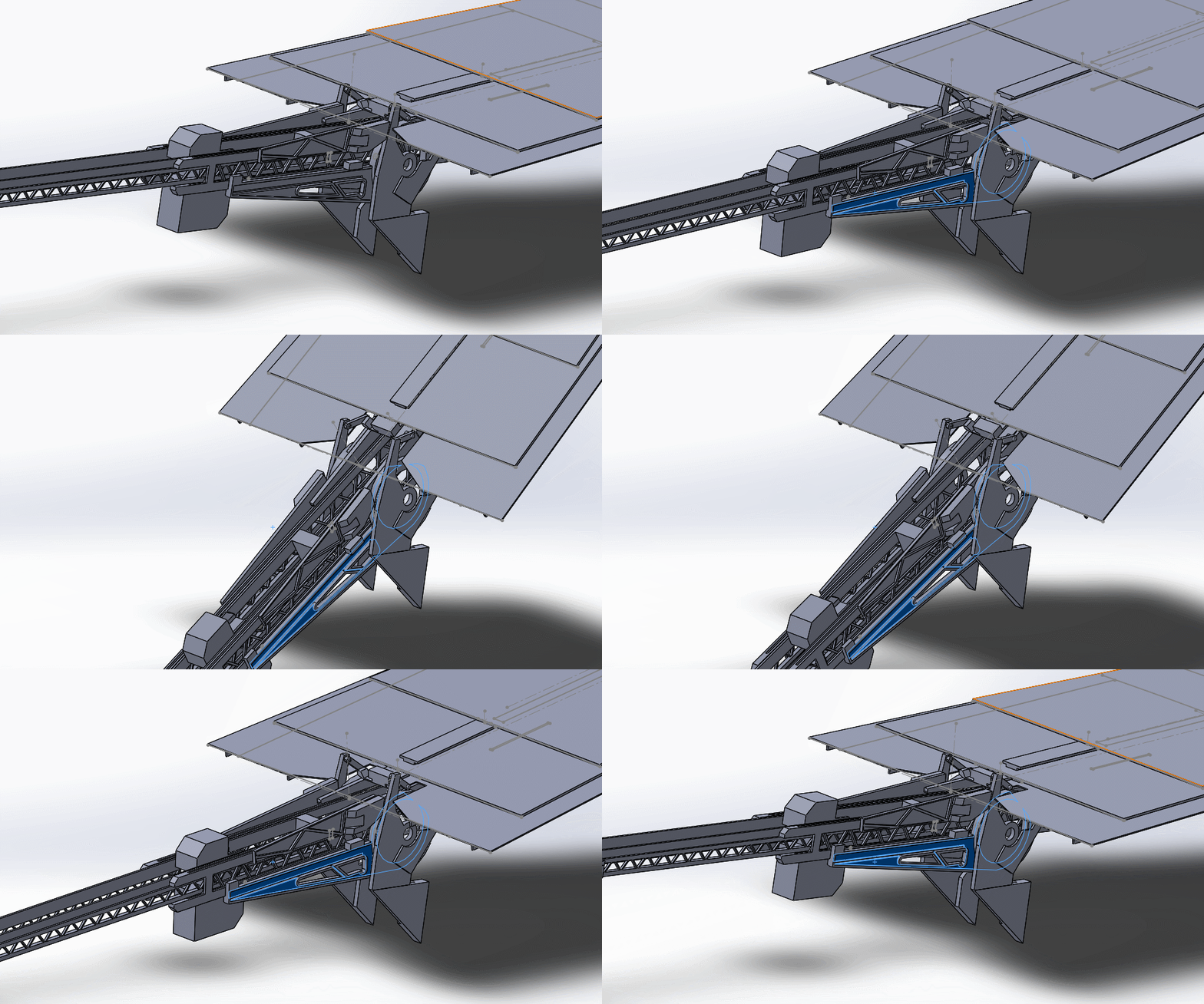
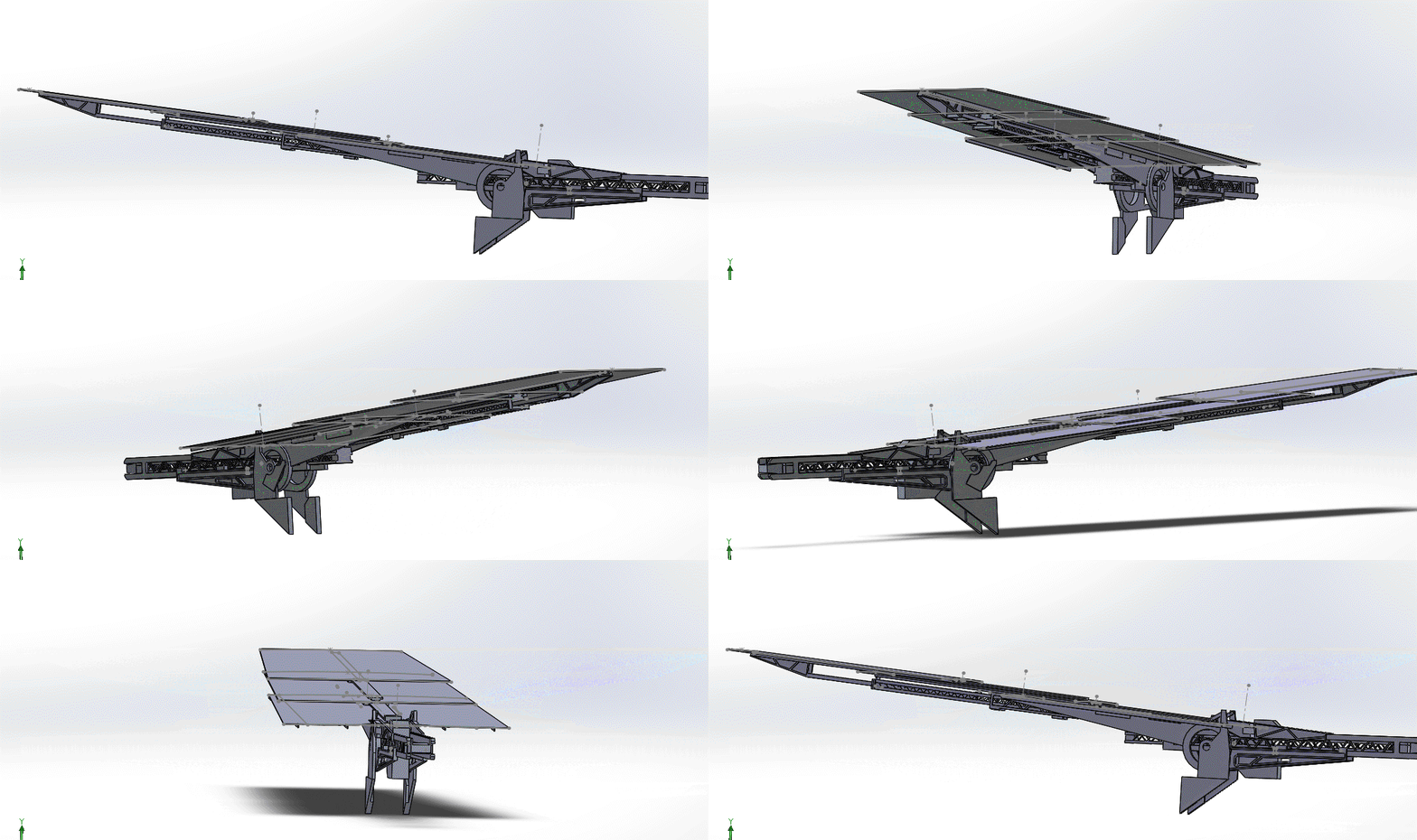
For the incorporation of this ideas to aninitial base for design, anapparently complex structure was sought, but despite this rather efficient because of the simplicity of its solutions. So the perimeterstructureof the complex, rather than being supported by columns every 6-10 m, in all directions, is instead supported by a balance lever in equilibrium: while the long arm pushes down because of the weight of the structure, the short one counteracts it through small and thin tension cables. In this way,the whole structure of the stadium remains in place despite the monumentally cantilevered appearance. The fact isthe balanceof weights eliminates all unnecessary extra support.
Concepto estructural
La base estructural del Nuevo estadio de Tokioestá fundamentado sobre la siguiente idea: ¿Por qué gastar en levantar una estructura para cada elemento del proyecto, independientes y superpuestas una sobre otras:estructura, súper-estructuras, sub-estructuras, si se puede lograr que se sostenga una sola a si misma, cada elemento uno a otro, a través del equilibrio de sus partes?
Tomando esto como base inicial, se buscó una estructura en apariencia compleja, pero eficiente por la sencillez de sus soluciones. La estructura perimetral del complejo así, en vez de estar sostenido por columnas cada 6-10m en todas direcciones y sentidos, está sostenida por un palanca en equilibrio o una balanza. Mientras el brazo largo empuja hacia abajo por el peso de la estructura, el brazo corto lo contrarresta a través de tensores pequeños y delgados. De esta manera, todo el estadio se mantiene en su sitio a pesar de la estructura monumental de apariencia en volado. La idea es equilibrar los pesos, eliminando así soportes extra innecesarios.


The objective of taking the concept of a weighing scaleisboost performance of the mechanicalness of the structure.Let’s take the roof for example:lifting a cover of this size surelyrequires an impressive amount of energy, and the wearing of the components. But if it can auto-balance its masses at all times, the effort will be minimal: as the great wise Archimedes said: "Give me a place to stand and a lever long enough and I will move the world".
The movement of a child’s seesaw clearly exemplifies the idea: a body positioned at one end of the seesaw, at the right distance, can lift a similar amount of mass at the other end. As you move away, you can lift even more weight, or can balance the forces maintaining both bodies in a state of suspension in the air. Similarly, is possible tomove them down and up softly, with barely noticeable changes.
All this can happen in a natural way and without abrupt movements, only through mechanical horizontal movements to the right place, at the right time and the rest is done by gravity.
This principle, applied to the cover of the stadium, makes the structure more complex, but safer with the environment. So, we have a modern and cost-effectivefacility in the long term, also quite sturdy and difficult to decompose, but above all, we have a cover that can adapt to the climate, allowing free flow of air, open for evening concerts, closed in rain, capable of following the sun movementsand providing a unique viewing experience.
La idea de tomar el concepto de la balanza es la de eficientar la mecanicidad de la estructura. Por ejemplo, la techumbre: levantar una cubierta de estas dimensiones representaría un gasto impresionante de energía y desgaste de las piezas. Pero si se logra equilibrar las masas en todo momento, el esfuerzo serámínimo, como dijo el gran sabio Arquímedes: “Denme Un Punto De Apoyo Y Moveré El Mundo”.
La idea puede ejemplificarse con el movimiento del juego infantil de sube y baja, en donde un cuerpo en un extremo de un balancín, colocado a la distancia adecuada, puede levantar al otro extremo del mismo una cantidad de masa similar a la suya. conforme se aleja, puede levantar aúnmás peso, y conforme se acerca, o puede equilibrar las fuerzas manteniéndose ambos cuerpos en un estado de suspensión en el aire, o bajar y subir con la mayor de las suavidades apenas perceptibles.
Todo esto ocurre de una forma natural y sin movimientos abruptos, solo se necesitan movimientos horizontales mecánicos al lugar indicado, en el momento adecuado y el resto es efectuado por la misma gravedad.
De esta manera y aplicado a la cubierta del estadio, la estructura se vuelve mas compleja, pero saludable con el entorno. Así, tenemos una cubierta moderna y barata a largo plazo, pero tambiénmás imponente y difícil de descomponerse, pero sobre todo, tenemos una cubierta que puede adaptarse al clima, permitir el flujo libre de ventilación, abrirse en la noche a conciertos, cerrarse en la lluvia, adaptarse al movimiento del sol y brindar una experiencia única al espectador.